Spare a thought for the departed
It’s been a couple of months now since Q&A left us. It’s gone, buried in the great graveyard of TV programs of yore, alongside The Project and The Drum.
25 August 2025
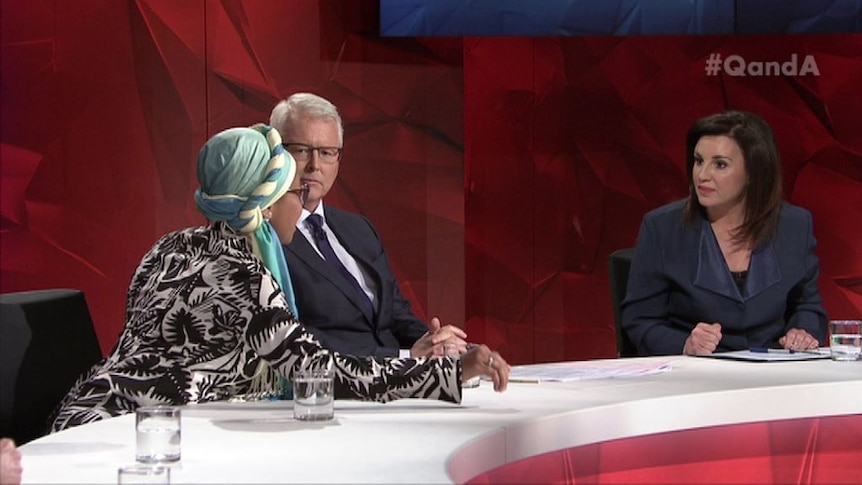
Q&A was a place for ideas to be raised, and attitudes challenged. Photo ABC News
Where else offers the same opportunity to deliver a message unfiltered, hear a response (murmurs or groans) from an audience, engage directly with people, be grilled by sceptical onlookers, in real time? And that’s not even taking into account the wild unscripted moments, like panellists making unhinged statements, yelling at each other, or even collapsing on the desk. Q&A offered discourse in a setting that had the potential to become manic.
For all of these reasons, Q&A was the format most feared and revered in equal measure by those in politics or politics-adjacent roles, basically anyone looking to get their message out. As a potential media opportunity, no other could give the speaker a better platform from which to state their case in a clear and unbridled way, but one that came with a high degree of difficulty.
It feels a bit grandiose to say this, but Q&A was the very model of the Ancient Greek agora: a space in the town marketplace to share ideas, thoughts, and argue your case, in front of an audience of peers.
From filling seats to filling airtime
I’ve worked on a couple of different sides of Q&A. In 2012, when the show travelled to New Delhi, I was hired as the audience producer, basically to gather together an audience. It was no mean feat: the program had booked an 800-seat theatre in Gurgaon, basically the equivalent of Penrith, and my job was to fill it. Gurgaon is home to a lot of corporates and MNC offices, but the kind of people that Q&A deem relevant, those working in policy, politics, NGOs or foreign affairs, are closer to central Delhi, and were reluctant to make the trek out. Particularly not for a program they’d never heard of from a country they’re only peripherally interested in, to not appear on stage themselves.
I managed, through enormous grit and perseverance, to fill 300 seats. I used every trick in the book: friends teaching journalism brought their students, a charity supported by the Australian government sent a few dozen kids, my own housekeeper brought her extended family, filling 12 seats. The kids didn’t speak English but sat through the two hours politely and quietly, the cameras panning over their heads.
More recently, I’ve worked as a media advisor angling to get my people onto a panel (I was successful, finally). And I’ve delivered media training to numerous NGO staff who say that a Q&A appearance would be the gold standard for them, ticking all their yearly engagement KPIs in one go.
And of course, I’ve been a viewer, off and on over the years but more regularly in the past few years.
From the bad show to a better balance
Everyone I know called it ‘the bad show’. “Why would you watch the bad show?’ They say, when I’d tell them that Monday nights were for wine and yelling at the TV. And I’d tell them that the famous combativeness died down after Tony Jones left. Back then, I’d find it a difficult watch. Air time seemed to only go to the polished speakers who could parse a message in ten- to 15-second soundbites, and could respond as crisply and cleanly when pushed.
Panellists who needed a few seconds to think, or stumbled as they tried to defend their positions were left behind. I remember Bob Carr filibustering, waiting for him to get to the point but simultaneously awed by his ability to fill air space without actually saying anything, and managing not to be spoken over.
Then came Hamish MacDonald, then Stan Grant, and it appeared for a while that the host’s chair was a poison chalice, attracting spite and hate-filled rants and prejudiced vitriol online, leading to both men stepping down after relatively short stints.
But the new era brought about a change in the dynamics of the show. There was more gender and other diversity. There was a kinder, less combative approach to questioning. I noticed that in the past, panellists could be asked about anything, often leading to a heap of stammering as they tried frantically to work out what to say about a topic they knew nothing about, on the fly. Now, panellists seemed to be allowed to stick closely to their remit. And, of course, we’re worded up in advance on what topics they’d be speaking on, so they’d have a chance to prepare. It took away from the ‘gotcha’ element of the program (which I’ll admit is always fun to watch, but it meant that viewers had a chance to hear meaningful opinions, not wanking on to fill in the time (see aforementioned Bob Carr).
What fills the town square now?
So now that Q&A is gone, what are the ‘town square’ options? If you’re a politician or an advocate or activist, where can you go to have your message heard, in that unfiltered, unedited format? Or if you’re a viewer or politics tragic wanting to hear your favourite politician stammer their way through hard questioning?
The sad truth is: nothing that quite fits. There are the traditional stalwarts: ABC local radio, Radio National, Insiders on ABC TV. The interview slot on 7.30, still a hard-edged political interview that leaves talent sweating. Otherwise, you can drop a press release or pen an op-ed every time you have an opinion or reaction. None of these are particularly groundbreaking.
Some politicians have mastered social media, like Anne Aly, who is truly excelling at creating watchable, shareable content, full of energy and personality, and conveying her message in a succinct way. However building an audience takes time: it’s not a matter of one or two videos, but a constant stream of them, and a willingness to perform for the camera a few times a week. At the same time, it’s a stream of content that’s one-sided, where politicians are not having to answer questions, and have power to delete any comments they don’t like. Plus, Instagram and TikTok mean that visibility is up to the algorithm.
Another option is podcasts. There’s a reason that Anthony Albanese appeared on multiple podcasts, even those completely outside the news realm: because people listen to them, and tend to build up trust with the host. Podcasting is an intimate medium, and listeners can feel a strong emotional connection to the hosts and to speakers. The challenge is that there can be a bit of a credibility gap - like, Abbie Chatfield interviewing the PM? It’s not that she isn’t capable of doing a great job, which she is, but she’s not a journalist who has been trained to think and question in a particular way.
The missing water cooler moment
But none of these have the essential quality of Q&A, the water cooler moment, the thing that everyone’s talking about the next day. One of the final episodes featured a discussion about the plight of women over 50, and a couple of audience members shared the realities of their experiences: trying to eke out an existence on a tiny amount of Newstart money while trying to find a job as an older woman. The details were shocking, poignant - and memorable. Since then I’ve seen those comments referenced a couple of times in LinkedIn posts. That these women got air time on a national program was down to one thing: the format, which permitted them to directly question or address a member of Parliament.
For now, the era of panel TV programs appears over. Perhaps the ABC has a new idea up its sleeve, one that will drive viewers and engagement. But for those who genuinely got in to the format and the fray, Monday evenings are an emptier prospect. As is our political discourse.
Need to prepare yourself for a media appearance? Get in touch. Or learn more about our media training services.